
 Blog
Blog
Is TV Dead? Why Smart Brands Are Returning to the Big Screen


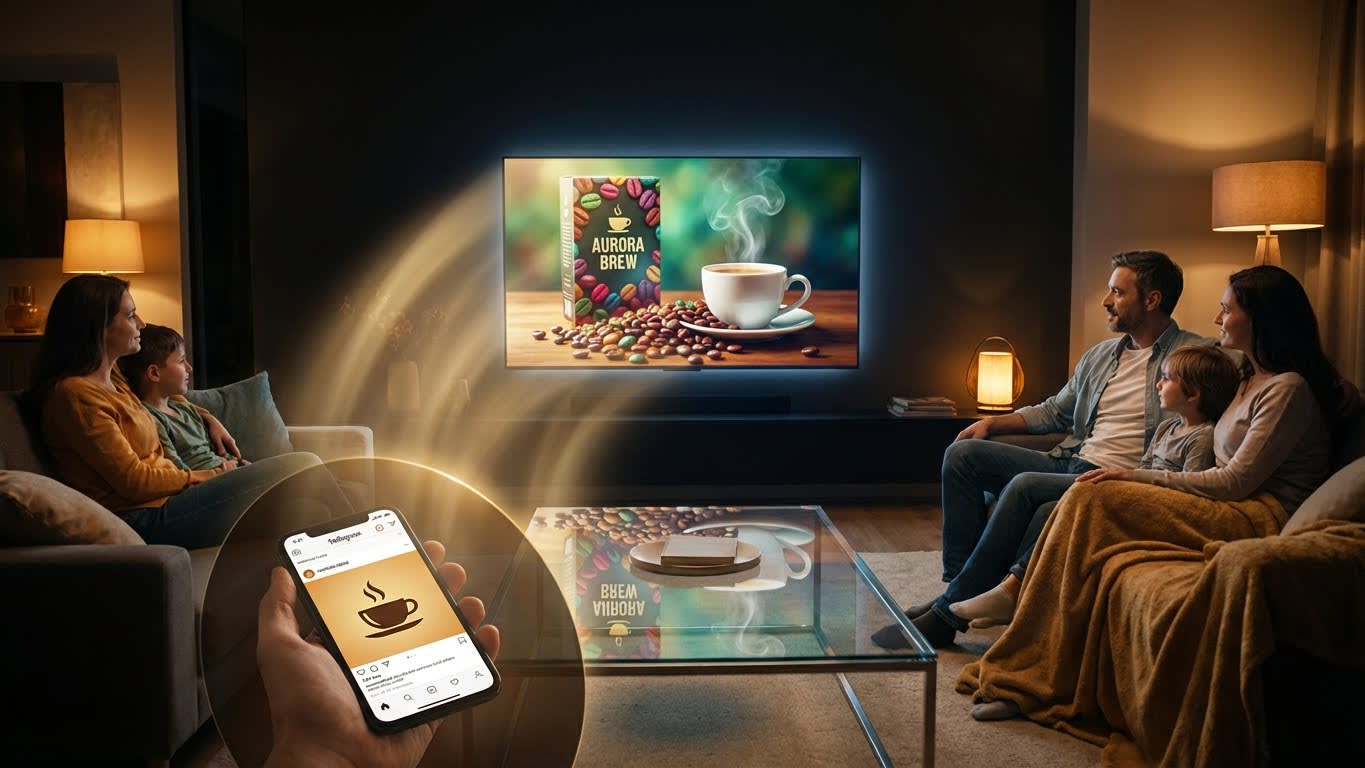
Is TV Dead? Why Smart Brands Are Returning to the Big Screen
Digital ads get clicks, but TV builds empires. We explore the psychology of "Costly Signaling" and why running TV commercials actually makes your digital marketing cheaper and more effective. Learn why smart brands use mass media to build trust that the internet can't replicate.



If you listen to the "gurus" on Twitter, they will tell you that TV advertising is a dinosaur. They will tell you to put 100% of your budget into TikTok, Instagram, and Google Ads because "that’s where the attention is."
They are half right. But being half right in business is dangerous.
While digital advertising offers precision, it lacks one crucial element that digital has never been able to replicate: Prestige.
There is a reason why Google, the king of the internet still buys Super Bowl ads. There is a reason why the biggest startups eventually move to television. Here is the psychology behind why Commercial Advertising is still the ultimate authority signal, and why your brand might be ready for the big screen sooner than you think.
1. The "Costly Signaling" Theory
In behavioral economics, there is a concept called Costly Signaling. Anyone can run a Facebook ad for $5. It requires zero vetting and zero capital. Because the barrier to entry is low, the trust is low. When a consumer sees a digital ad, their brain subconsciously thinks, "This could be a scam."
TV is different. Consumers know that being on a major TV channel is difficult and expensive. Therefore, when they see your brand on TV, their brain subconsciously signals: "This company is real. They are solvent. They are trustworthy."
You aren't just paying for a 30-second slot, you are paying for immediate legitimacy.
2. The Halo Effect (Making Digital Work Harder)
We often view Digital and TV as enemies. In reality, they are partners. Data shows that running TV commercials actually lowers your Customer Acquisition Cost (CAC) on digital channels.
Why? Because of the "Halo Effect." If a customer sees your commercial on the news at 7:00 PM, and then sees your Instagram ad at 8:00 PM, they are significantly more likely to click. The TV ad warmed them up. the digital ad captured the lead. If you rely solely on digital, you are constantly fighting for attention against cold audiences. TV warms the room before you even walk in.
3. Reaching the "Un-Targetable"
Digital marketing is obsessed with "targeting." You target by age, interest, and location. But sometimes, hyper-targeting backfires. You end up preaching to the same small choir over and over again.
Mass media casts a wider net. It puts your brand in front of decision-makers you didn't even know existed, the parent buying for a child, the CEO watching the news, the investor looking for the next big thing. It builds Brand Fame, not just clicks.
How to Approach Mass Media Today
The barrier to entry for TV isn't as high as you think, but the complexity is real. Dealing with networks, negotiating slots, and ensuring technical compliance can be a nightmare for a business owner.
This is where strategy matters. You don't just "buy a slot." You need to match your commercial to the exact demographic viewing time. You need to ensure the audio-visual quality meets broadcast standards.
At Seya Solutions, we handle this friction. We bridge the gap between your brand and the major networks, handling the media buying and placement strategy so you get the authority of TV without the logistical headache.
The Verdict
Digital is for Action (clicking, buying, signing up). TV is for Trust (believing, remembering, respecting).
If you want a transaction, run a Facebook ad. If you want to build a legacy brand that dominates the market, you eventually have to show up where the big players play.
Ready to see your brand on the big screen?